Guide · Heart health
Omega-3 after 50: fish oil dose, benefits and what the big trials found
Fish oil is one of the most popular supplements after 50, and one of the most misunderstood. Here is what EPA and DHA do, what the largest trial in older adults found, why more is not better, and how to read a label.

Quick answer
- Food first: fatty fish about twice a week gives most people the omega-3s they need.
- The big trial: in VITAL, about 840 mg a day of EPA plus DHA did not reduce heart attacks, strokes and heart deaths combined in healthy adults over 50.
- More is not better: trials of high doses found a higher risk of atrial fibrillation, especially above 1 g a day.
- Read the label: count the mg of EPA + DHA, not the mg of “fish oil”.
EPA, DHA and ALA in plain language
Omega-3s are fats your body needs but can't make in useful amounts. ALA comes from plants such as flaxseed, chia and walnuts. EPA and DHA come mainly from fatty fish and algae, and they are the forms studied for the heart. The NIH sets an adequate intake only for ALA (1.6 g a day for men and 1.1 g for women over 50). There is no official daily amount for EPA and DHA.
| Best food sources of EPA + DHA | Salmon, sardines, mackerel, herring, trout |
|---|---|
| Plant source (ALA) | Flaxseed, chia seeds, walnuts, canola oil |
| American Heart Association | About two servings of fish a week for most adults |
What the research says
| Question | What the best trials found |
|---|---|
| Heart disease in healthy adults | VITAL (25,871 men 50+ and women 55+, about 5 years, 840 mg EPA + DHA a day): no drop in heart attacks, strokes and heart deaths combined. Heart attacks alone fell by 28%, a secondary result that needs confirming. |
| High triglycerides | Omega-3s lower triglycerides by about 15% on average. High prescription doses (4 g a day) are used for this, under a doctor's care. |
| Atrial fibrillation (a heart rhythm problem) | Across 7 large trials (about 81,000 people), omega-3 supplements raised the risk by about 25%, more at doses above 1 g a day. |
| Eyes and memory | AREDS2: adding omega-3s did not slow age-related macular degeneration or improve memory scores. Dry eye results are mixed. |
The honest summary: if you eat fish regularly, a supplement adds little. If you rarely eat fish, a modest dose of up to about 1 g of EPA + DHA a day is a reasonable choice to discuss with your doctor. Higher doses are a medical decision.
How to read a fish oil label
- Find EPA and DHA on the Supplement Facts panel and add them up. A “1,000 mg fish oil” softgel often has only about 300 mg of EPA + DHA.
- Check the serving size: many products need 2 softgels for the amount on the front.
- Look for third-party testing (for example NSF or USP) for purity and freshness.
- Avoid fish oil if you are allergic to fish; choose an algae oil instead, which is also the vegan option.
- Check other ingredients, such as soy, if you have allergies.
Who should talk to a doctor first
- Anyone who has had atrial fibrillation or another heart rhythm problem.
- People taking blood thinners such as warfarin, or with a bleeding disorder.
- Anyone with a fish or shellfish allergy.
- Anyone with high triglycerides or heart disease: your doctor may prefer a prescription product.
Common side effects are mild: a fishy taste, burps, heartburn, nausea or loose stools. Taking the softgel with a meal usually helps.
Our picks
Two options from Dr. Tobias, a supplement brand sold online and on Amazon. Prices were checked on the brand's website on October 26, 2026 and can change.
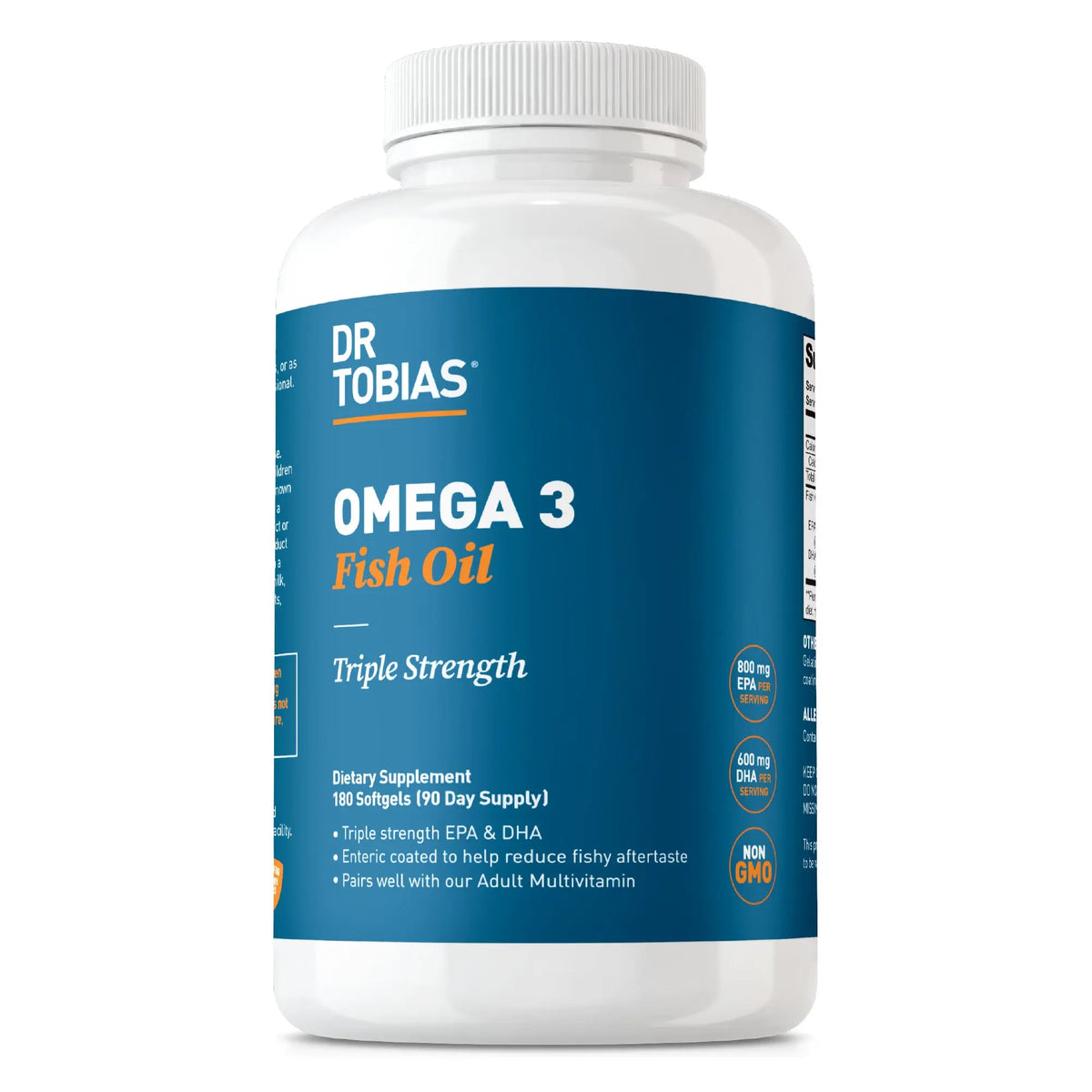 Fish oil
Dr. Tobias Triple Strength Omega 3 Fish Oil
800 mg EPA + 600 mg DHA per 2 softgels · enteric-coated · NSF Certified (per the seller) · contains soy · from $19.99 for 60
The full serving (1,400 mg) is above the VITAL dose. One softgel a day gives about 700 mg of EPA + DHA, close to what VITAL used, and makes a bottle last twice as long.
See it at Dr. Tobias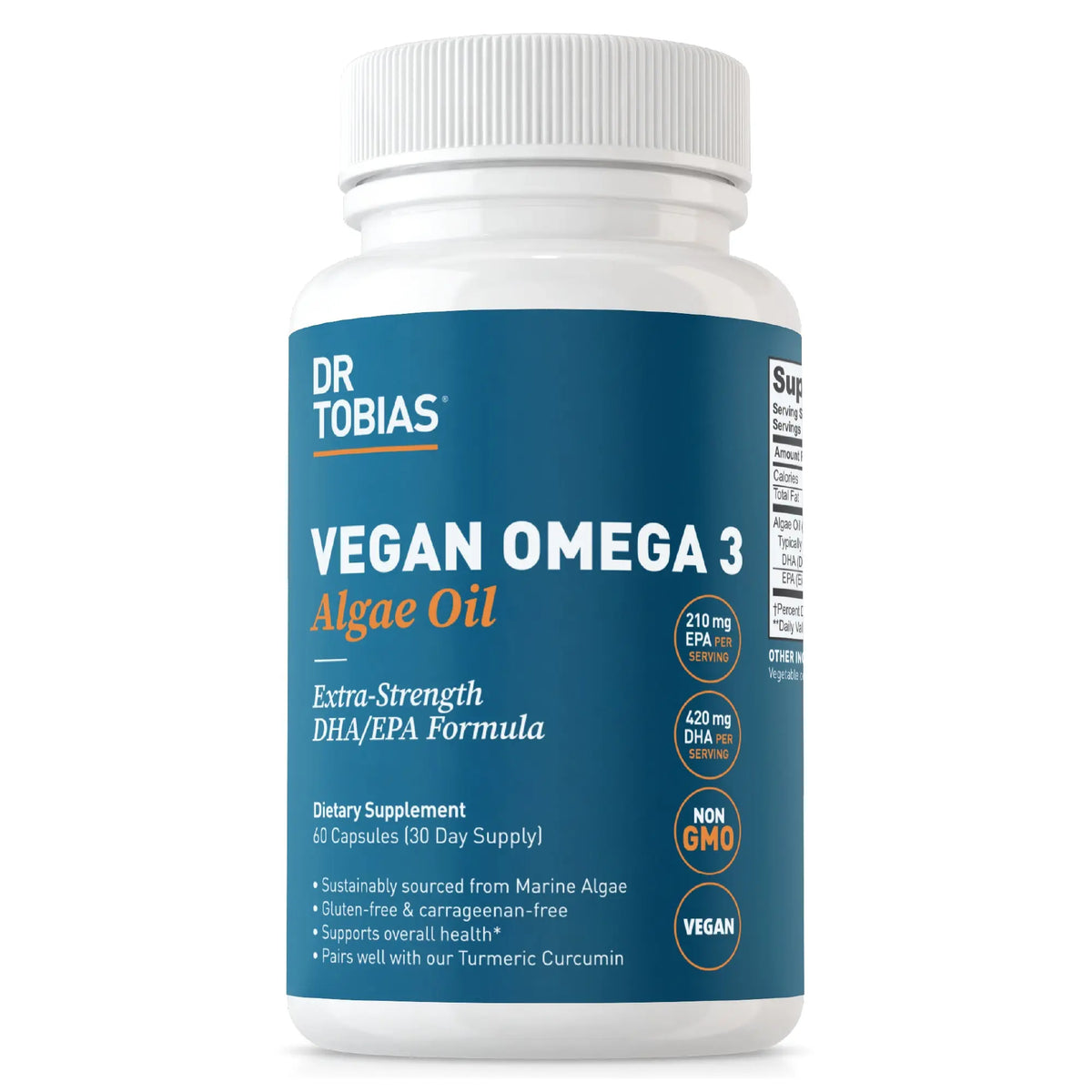 Vegan / fish allergy
Dr. Tobias Vegan Omega 3 Algae Oil
420 mg DHA + 210 mg EPA per 2 capsules · from algae · $15.99 for 60
A plant-based source of EPA and DHA for people who don't eat fish or are allergic to it.
See it at Dr. TobiasSome links are affiliate links. We don't recommend more than about 1 g of EPA + DHA a day without your doctor's advice, and none of these products is intended to treat any disease.
Cholesterol is the other half of heart health: see our guides to probiotics for cholesterol and mushroom supplements.
Frequently asked questions
Should I take fish oil after 50?
Most healthy adults can get enough omega-3s by eating fatty fish such as salmon, sardines or mackerel about twice a week. The American Heart Association does not recommend omega-3 supplements for people who are not at high heart risk. If you rarely eat fish, a modest supplement is a reasonable option to discuss with your doctor.
How much omega-3 should I take a day?
There is no official daily amount for EPA and DHA. The large VITAL trial used about 840 mg of EPA plus DHA a day. The FDA considers up to 5 g a day from supplements safe, but trials of 4 g a day found a higher risk of atrial fibrillation, so more is not better.
Does fish oil cause atrial fibrillation?
A 2021 analysis of 7 large trials with about 81,000 people found omega-3 supplements raised the risk of atrial fibrillation by about 25%, and the risk was higher in trials using more than 1 g a day. If you have had atrial fibrillation, talk to your doctor before taking fish oil.
Can I take fish oil with a blood thinner?
Ask your doctor first. According to the NIH, most research shows that 3 to 6 g a day of fish oil does not significantly change warfarin's effect, but your doctor should know about every supplement you take.
Does omega-3 help eyes or memory?
In the AREDS2 trial, adding omega-3s did not slow age-related macular degeneration or improve memory test scores in older adults. Results for dry eye have been mixed.
How do I stop fishy burps?
Take fish oil with a meal, keep it in a cool place, and consider an enteric-coated softgel or a smaller dose split through the day.
Sources
- National Institutes of Health, Office of Dietary Supplements: Omega-3 fatty acids fact sheet for health professionals
- Manson et al., Marine n-3 fatty acids and prevention of cardiovascular disease and cancer, VITAL trial (New England Journal of Medicine, 2019)
- Gencer et al., Omega-3 supplementation and the risk of atrial fibrillation: systematic review and meta-analysis (Circulation, 2021)
- AREDS2 Research Group, Lutein + zeaxanthin and omega-3 fatty acids for age-related macular degeneration (JAMA, 2013)