Guide · Heart health
Can a probiotic help cholesterol? What the L. reuteri research shows
Probiotics are sold for almost everything, but only one strain has a placebo-controlled cholesterol trial in people behind it. Here is what that study found, what it didn't show, and where a probiotic fits next to diet and medicine.

Quick answer
- One strain, one key trial: L. reuteri NCIMB 30242 lowered LDL (“bad”) cholesterol by about 12% versus placebo in 9 weeks.
- What it didn't show: no change in HDL or triglycerides, and no study of heart attacks or strokes.
- It's not a statin: never stop a prescribed medicine for a supplement.
- Most probiotics on the shelf have no cholesterol research at all; the strain name matters.
Why the strain name matters
Probiotics are named by genus, species and strain, like a first name, last name and ID number. Research on one strain does not carry over to another. The cholesterol study below used Lactobacillus reuteri NCIMB 30242, a strain chosen because it breaks down bile acids in the gut, which can reduce how much cholesterol and plant sterols the body absorbs.
What the trial found
| Who | 127 adults with high cholesterol (completed the study) |
|---|---|
| Design | Randomized, double-blind, placebo-controlled, several centers, 9 weeks |
| LDL cholesterol | −11.6% versus placebo |
| Total cholesterol | −9.1% versus placebo |
| HDL and triglycerides | No change |
| Published | European Journal of Clinical Nutrition, 2012 |
That is a meaningful result for a supplement, from a well-designed study. But it is one main trial, it lasted only 9 weeks, and it measured blood numbers, not heart attacks or strokes. For comparison, statins lower LDL much more and have been shown to prevent heart events.
Where a probiotic fits
- Start with your doctor's plan and a lipid panel, so you know your numbers.
- Soluble fiber from oats, barley and beans has an FDA-authorized heart-health claim; see our heart guide for the habits that matter most.
- If your numbers are borderline and you want to try something, a studied strain is a more reasonable choice than a random blend.
- Recheck your cholesterol after two to three months: the lab result is the real test.
Who should talk to a doctor first
- Anyone taking a statin or other cholesterol medicine.
- People with a weakened immune system, a central line, or who are seriously ill or recovering from surgery.
- Anyone with very high cholesterol or a family history of early heart disease: that needs a medical plan, not a supplement.
Our picks
Microbiome Plus sells L. reuteri NCIMB 30242 under its own name; it is one of the few products that names this strain on the front.
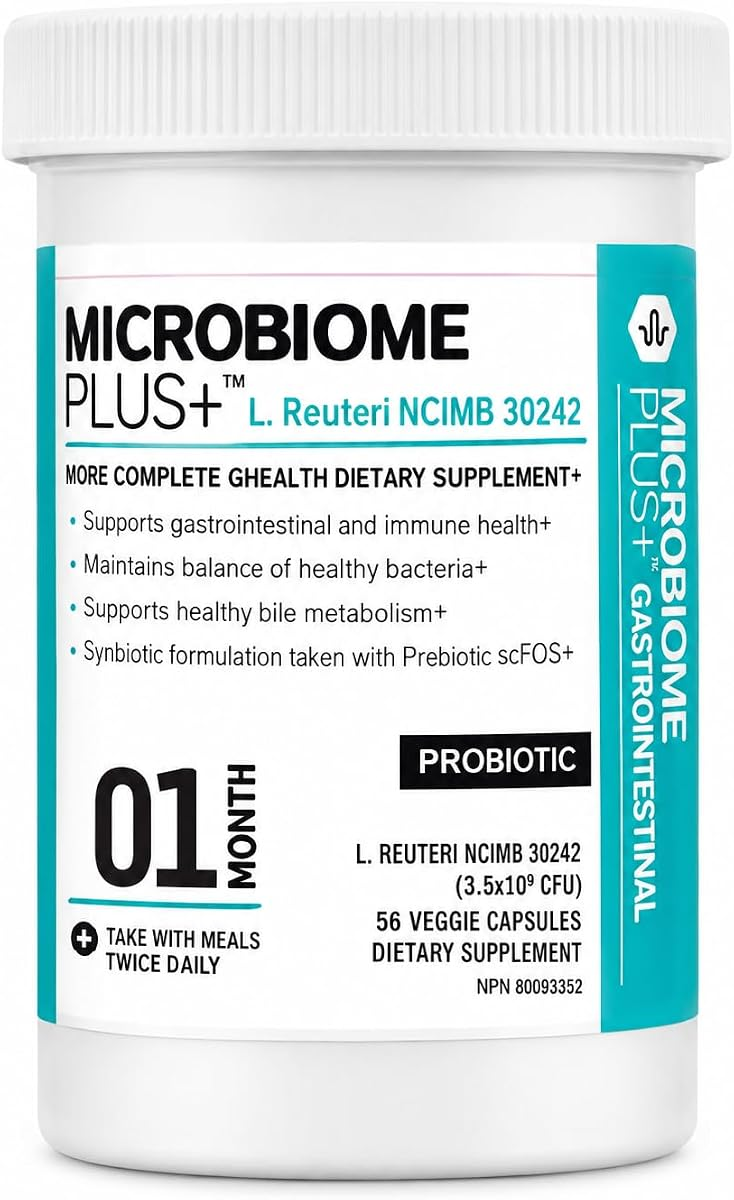 The studied strain
Microbiome Plus+ L. reuteri NCIMB 30242
3.5 billion CFU per capsule · 1 capsule twice a day with meals · 56 veggie capsules (4 weeks), per the label
The strain name is printed on the front of the bottle. The seller describes it as support for cholesterol levels that are already normal, which is the right, careful wording.
See it at Microbiome PlusSome links are affiliate links. A probiotic does not replace cholesterol medicine, and this product is not intended to treat any disease.
Also on heart health: our mushroom guide and our Cholibrium review.
Frequently asked questions
Do probiotics lower cholesterol?
Most probiotics have not been shown to. One strain, Lactobacillus reuteri NCIMB 30242, lowered LDL cholesterol by about 12% compared with placebo in a 9-week trial of 127 adults with high cholesterol. That is one well-run trial, not proof that probiotics in general work.
Can a probiotic replace my statin?
No. Never stop or change a prescribed cholesterol medicine without your doctor. Statins have been shown to prevent heart attacks and strokes; no probiotic has.
How long does it take to see a change?
The trial measured cholesterol after 9 weeks. If you try a probiotic, ask your doctor to recheck your lipid panel after two to three months.
Are probiotics safe for older adults?
They are generally well tolerated, with mild gas or bloating at first. People with a weakened immune system, a central line or serious illness should ask their doctor before taking any probiotic.
Sources
- Jones et al., Cholesterol lowering and inhibition of sterol absorption by Lactobacillus reuteri NCIMB 30242: a randomized controlled trial (European Journal of Clinical Nutrition, 2012)
- U.S. Food and Drug Administration health claim: soluble fiber from certain foods and risk of coronary heart disease (21 CFR 101.81)